Sunday, July 31, 2005

The Fans Who Would Be Kings

A review of:

The Notenki Memoirs: Studio Gainax and the Men Who Created Evangelion
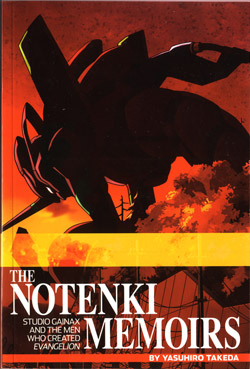
Notenki MemoirsWhen I heard that this book was being released in English by ADV Manga, I immediately knew I had to get it. I consider myself a fan of Gainax, and I've always been interested in its history, especially the company's pre-Evangelion days, which is what the book focuses on (less than one full page is spent talking about post-Eva Gainax works). As it turns out, The Notenki Memoirs by Yasuhiro Takeda (originally published in Japan in 2002) was exactly the book I was looking for.

In case you were wondering, "Notenki" refers to Takeda himself. Back in the early 80's, some of the fans who would eventually form Gainax made amateur films. One such film, Kaiketsu Notenki, featured Takeda as Notenki, the hero of the story. Because of that, many people still humorously refer to Takeda as Notenki.
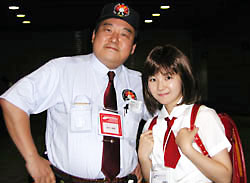
Yasuhiro TakedaYasuhiro Takeda (pictured right, with a Daicon III cosplayer) is currently the General Manager of Gainax. That title is a bit elusive, however, as is Takeda's actual role in the company. In a company as freewheeling as Gainax, job titles have traditionally not meant very much. People just did whatever was necessary to keep the company going and to finish whatever projects were going on. (Oftentimes, poor management led to projects not being completed, but you can read about that in the book.) In a nutshell, Takeda is one of the top administators of Gainax, and more importantly, he has been involved with the company from the very beginning, even in the days before Gainax was officially incorporated in December of 1984.

Gainax has always been known as an otaku-centric company--by fans for fans. It's part of their public persona, such as portrayed through Otaku no Video, the anime whose plot is loosely based on the origins of Gainax itself. Takeda's book delves into the fannish origins of the now legendary company. In great detail, Takeda explains the climate of science fiction and anime fandom in late 70's Osaka and how it became the most important thing is his life. From his descriptions of finding the sci-fi club at college, skipping classes to read novels and debate them with his friends, attending his first sci-fi conventions, to eventually creating (with his friends) conventions of his own, Takeda's story is one that's all about the passion and creativity of the original Otaku Generation. For Takeda, that meant organizing clubs, projects, networks of friends, and events--all for fun, of course. One thing was made clear by Takeda's book: his genius and creativity manifest themselves in his networking abilities, his charisma, and his earnestness. As such, Takeda has always been involved in the business side of things at Gainax--day-to-day affairs, long-term strategy, partnerships, public relations, and whatnot.

Daicon IIIThere were two groups of important people in the very early days of Gainax: the organizers and the creators. On the creator side of things, we have some very familiar names: Hiroyuki Yamaga, Hideaki Anno, and Takami Akai. On the organizer side of things, we have: Toshio Okada, Takeshi Sawamura, and Yasuhiro Takeda. Gainax would not exist without both of these groups coming together to put on Daicon III and to create its now legendary opening animation. Toshio Okada, who was also with the company at the very beginning, has been the most publically visible of the organizers group, and he has talked about the history of Gainax before in lectures, interviews, etc. Okada, however, left the company in 1992 for reasons that are apparently somewhat in dispute. Takeshi Sawamura, who was around at the beginning but didn't join Gainax right away, was the individual held responsible for Gainax's tax evasion woes, and he left the company in 2000. That leaves Takeda, the only original Gainax board member still with the company.

Having attended numerous anime conventions over the course of years, I've had the opportunity to see in person (and in some cases speak to) various members of Gainax, including Hideaki Anno, Hiroyuki Yamaga, Takami Akai, Yasuhiro Takeda, Yoshiyuki Sadamoto, Kazuya Tsurumaki, Hiroki Sato, and Toshio Okada. Of these, I found Yasuhiro Takeda to be the most friendly, open, and earnest of the bunch. Even though there are some conflicting accounts regarding some of the early Gainax and pre-Gainax happenings, I tend to trust Takeda at least a little bit more than the others. He doesn't seem to be the type who would lie, embellish, or exaggerate, and that makes him the perfect Gainax historian. In a company of anime creators who radiate rockstar auras, Yasuhiro Takeda seemed positively down-to-earth. I felt comfortable enough in his presence to ask him about his Wings of Honneamise necktie at FanimeCon 2003. (My friend James brazenly asked how much Gainax has to pay in taxes. Takeda answered candidly and with a sense of humor. Feigning (?) despair, he started writing a long string of zeroes on a napkin to illustrate the horribly large amount of money Gainax had to pay. James and I smiled, expressed our sympathies, and moved onto happier subjects.)

The strength of The Notenki Memoirs is Takeda's straight-shooting account of pre-Gainax and Gainax activities--an accounting of who was who, who did what, when, where, and why. The book includes an extensive set of notes to explain things further, and even a glossary of names to help keep track of who everyone is. What is lacking, however, is an in-depth account of the other side of the company, the wildly creative side. The book barely discusses artistic decisions at all. Descriptions of anime planning and production are very sparse indeed. In fact, if you haven't seen the entire body of Gainax's work pre-Evangelion, most of Takeda's discussion of anime will go right over your head since he doesn't describe the anime in much detail. That said, this book is meant for hardcore Gainax fans, people who love Otaku no Video as much as (or more than) Neon Genesis Evangelion. By the way, The Notenki Memoirs are an excellent accompaniment to Otaku no Video; they're kind of like extended liner notes.

The interview at the end with Takami Akai, Hideaki Anno, and Hiroyuki Yamaga was a nice addition, but it was solely for the purpose of their talking about Takeda, not about their own artistic motivations and the things that inspired them. Even though the book's cover features an Evangelion image, and the subtitle is "Studio Gainax and the Men Who Created Evangelion", The Notenki Memoirs is really not about Evangelion. Readers hoping for juicy details about where Anno got his ideas for the religious imagery in the series, or exactly what he was thinking when he made the final episodes and the movies, will be disappointed. What they will get instead is a sense of history and context. Who are these Gainax guys and where did they come from? What motivated them to become interested in anime and science fiction, and to get together to create amazing amateur works? How and why did they go professional? If you're interested in these questions, Takeda's book is for you.

Up until now, the history of Gainax in English has only been available through a handful of interviews and articles, most of them saying exactly the same few things, or in some cases contradicting each other. The Notenki Memoirs is now the most detailed and most authoritative recounting of Gainax's history in the English language. Being a Gainax fan, it was an absolute pleasure to read.

That said, it's not only Gainax otaku who will enjoy the book. Hardcore fans of anime in general will appreciate Takeda's story if only to read about people like themselves, and to be inspired by their success story. Takeda is an important figure in the Japanese science fiction convention scene, so anyone who is interested in fan convention culture, or who has ever had a good experience staffing a fan convention, will also like Takeda's book since a lot of time is spent detailing various events he has been involved with.

Coming in at 172 pages with relatively large text, The Notenki Memoirs is a very quick read. Information junkies, however, will enjoy the additional notes which are quite dense, and that doesn't even include the extra interview at the end of the book, a full timeline of events, and the bonus account of Takeda's hosting of the 2001 Japan Science Fiction Convention. My main complaint is that the book was lacking in illustrations; it only included a few small black and white photographs. (See the trivia and history sections of my Daicon website for more photos.) Nonetheless, with a retail price of $9.99, I thought the book was totally worth it. I highly recommended it.

Wednesday, July 27, 2005

Otaku-mania!

No, I'm not talking about the maniacal way in which many otaku pursue their interests. I'm talking about the serious attention being paid to otaku culture these past couple of months on both sides of the pond (Japan and the United States). Readers of this blog already know about the Murakami-curated exhibit at Japan Society in New York City that just ended a few days ago. But that's just one thing on the radar. Here are some other otaku-related news items you might be interested in.

Otaku Unite! to be distributed by Central Park Media

Otaku Unite MascotThe anime fandom documentary Otaku Unite! will be released on DVD by Central Park Media (no release date announced as of yet). Here is the full story: http://www.toymania.com/news/messages/6880.shtml

I was really excited to hear about this because I helped out a little on the project. When I found out that Eric Bresler, the director, was working on the documentary, I immediately contacted him to find out how I could help. I didn't meet Eric in person until Anime Weekend Atlanta 2003, where I had the privilege of presenting a copy of the movie to Toshio Okada, who was a guest at that con. With Eric's help, I was able to interview Toshio Okada at AWA, which Eric videotaped. That interview is still unpublished, but with the new interest in Otaku Unite!, maybe that will change soon. Anyhow, I heartily recommend Otaku Unite! to anyone who is interested in anime fandom and the history of anime in the United States.

Otaku article in SF Gate

SFGate.com, the website of the San Francisco Chronicle, recently ran an article by columnist Jeff Yang called "ASIAN POP Generation O / Meet the otaku". In this article, he talks about Anime Expo, Otaku Unite!, anime fandom in the United States, changing perceptions of otaku in Japan, and the cross-cultural implications of otaku culture. Of course, these are all topics close to my own heart. As it turns out, Jeff Yang introduced himself to me at one of my recent Japan Society talks, and he interviewed me over the telephone for this article. I seem to think we talked for at least an hour even though I'm only quoted once, but I won't complain. The article was well-researched and informative--something that we need more of when it comes to public discourse about otaku culture. It was also fun to read, which is always a plus.

Seven Days in Japan wins "Best Documentary" award at San Diego Comic Con

Pop Japan Travel logoJoe Doughrity, an anime fan and writer from Los Angeles, attended a Pop Japan Travel tour to Japan in 2004 and made a documentary about it called Seven Days in Japan which recently won the "Best Documentary" award at San Diego Comic-Con. You can find a trailer on the movie's website, as well as ordering information. Having attended a PJT tour myself in February, I'm really curious and excited to see Joe Doughrity's work. I already placed an order, and will be watching it as soon as it arrives.
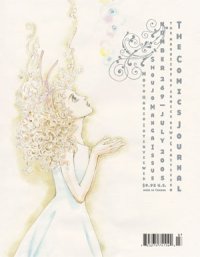
The Comics Journal special issue on shoujo manga

The Comics JournalThis isn't directly otaku-related, but those of you who have an academic interest in anime and manga might like to examine the latest issue of The Comics Journal. The July issue (#269), featuring beautiful cover art by Moto Hagio, focuses heavily on shoujo manga. It features reviews of shoujo manga, essays about shoujo manga, and an in-depth interview with Moto Hagio. For those of you who aren't so interested in shoujo, there's an interesting article about scanlations, and an article about manga and comic book shops.
A full table of contents, as well as a few of the articles and some excerpts, can be found here: http://tcj.com/269/index.html. One of the essays, "Filling the Void", briefly quotes me. (The author, Kai-Ming Cha, interviewed me over email a few months back.) I found my copy at Borders, so it shouldn't be too hard to find.

Student exhibit at Japan Society

On July 6th, I gave yet another lecture on otaku culture at Japan Society. This time, I was addressing the participants of a program called Experience Otaku! Create an Exhibition: An interactive Exploration of Contemporary Art & Culture for High School Students.

The students explored the Murakami exhibit at Japan Society, and learned about contemporary art and gallery exhibitions in general. Their final project was to create their own exhibit highlighting the issues behind something important in their own lives. Since all the participants were fans of anime and manga, they decided to make their exhibit about that--the complexitities of being teenage anime and manga fans in America.
student exhibitstudent exhibit

In addition to delivering my lecture, I went to the one-day exhibit (entitled "Pop Bunmei Kaika") on July 15th and was very impressed by the student work. It's a shame the exhibit couldn't have been more permament (all the displayed materials belonged to the kids, making any long-term exhibit impossible). From interacting with the teens who participated in the two Japan Society education programs I was involved with, it became very clear to me that this latest generation of American otaku is a force to be reckoned with. The mainstreaming of anime in the United States means that there will be more newbies at any given time, but it also means that more and more anime fans are becoming experienced and savvy younger than ever.

"Trainman" otaku makes waves in Japan

Densha OtokoAwareness of otaku culture is very high right now in Japan due to a story called Densha Otoko which translates to "trainman". Supposedly a true story, Densha Otoko is about an otaku who saves a beautiful woman from a drunk on a train. She sends him a thank-you gift, and our poor otaku protagonist is interested in pursuing a relationship with the woman but is clueless on how to proceed. As such, he explains his plight on 2ch (ni-chaneru), an online bulletin board, and gets advice from his fellow otaku. The story was published as a best-selling book, and was recently made into a movie which hit #1 at the Japanese box office. There's even a manga. A few weeks ago, the Densha Otoko TV drama premiered, which I am currently in the process of watching. Some otaku will recognize the opening animation sequence of the TV show as being an homage to the Daicon IV Opening Animation, which you can read about here: http://www.cjas.org/~leng/daitrivia.htm#densha

Densha Otoko has made big enough of an impact to draw the attention of some outspoken critics. Here are two articles responding to the Densha Otoko phenomenon that question the worth of otaku culture to Japanese society. While I don't agree with many of their conclusions, it's part of my research to keep track of how people are perceiving otaku, positively or negatively, and as far as criticisms go, these two are fairly interesting. At the very least, they indicate that otaku culture is currently very strong in the public consciousness of Japan.

Getting to the next stage in life and love

New horizons beckon as Train Man heads nowhere fast

Pointing out how otaku seem worthless is a much easier task for most people than explaining otaku culture's value to society. The easy way isn't always the best way, of course, which is why I think it's worthwhile to find and analyze the positive aspects of otaku-ism.

Denpa Otoko as a critique of Densha Otoko

It is interesting to note that some within Japan's otaku communities do not approve of the Densha Otoko story. This attitude is highlighted in the book by Toru Honda called Denpa Otoko, which translates to "radio wave man". You can read about it here: A world of his own: Create, erase, redraw

As far as Honda is concerned, the protagonist of Densha Otoko sold out, becoming less of an otaku for the sake of a woman. He feels that otaku culture is superior to mainstream culture, and that fantasy relationships with fictional females are better than real relationships with real women. This, of course, is a somewhat extreme position coming from a particular subset of otaku culture that is not representative of all (or even most) otaku, but that doesn't mean he should be ignored. From reading the article, and thinking about the otaku that I've met, I don't think that Honda's experience (as a child, especially) is typical, but it does highlight some of the negative pressures put on youth (in both Japan and the US) that cause them to seek belonging in one or more subcultures.

Otaku test draws attention in Japan

Here's an article that came out a few weeks ago describing an otaku test that will be administered by the publishing company Biblos in the August 5th issue of Elfics magazine. The top 100 scorers will receive a special certificate and bragging rights. One of the purported goals of the exam is to boost the status of otaku culture in Japan.

I like the sentiment, I really do, but it seems like the exam is mostly trivia-based (historical details about Comiket and video game consoles, for example). I am not against otaku trivia contests by any means (representatives of my anime club have done very well in the Otakon game show almost every year since 1996; I was a participant myself in 1997--see image below), but knowledge of trivia is, to me, one of the least interesting ways to identify who is or isn't an otaku, or who is more otaku than anyone else. If it's true that one can be an otaku of anything, how can you come up with a set of trivia questions that is fair to all the different kinds of otaku? At best, you can create a test specifically for anime otaku, or game otaku, or Comiket otaku, etc., but even those categories are be too broad.

Personally, I prefer otaku tests that focus on types of behaviors instead of specific behaviors and specific knowledge. One example that approaches that is the following:

The Anime Otaku-ness Test

Even that test (co-written by a friend of mine from college, as it turns out) is more about specific achievements and specific behaviors than attitude and generalized behaviors. To me, being an otaku means having an approach to life that is characterized by a particular set of strategies of engaging media (and other technologies) and a specific philosophy about (and longing for) information. These strategies and philosophical ideas cannot be distilled into specific behaviors and specific knowledge. Creating a written test to quantify otaku-ism meaningfully, therefore, is difficult at best.

As such, my studies of otaku are mostly qualitative. After all, with the right mix of attitudes and behaviors, a newbie who has only been watching anime for 3 months can be more of an otaku than someone who has been watching anime for 20 years. Quantitative otaku tests, even though they are fun, don't address that very well.


Otakon '97 game show
me, Jerry Hsu, and Greg Marques (CJASers, all) at the Otakon '97 game show

Friday, June 17, 2005

NYC, Oslo, and beyond

I've been on a whirlwind tour...

Last week, I spoke about otaku culture (the topic of my PhD dissertation research) on three separate occasions. On Wednesday, I gave a two hour presentation/Q&A session with the Nichibei Exchange, a group of New York City professionals who are all interested in Japanese culture and Japan/US relations. This month, they wanted to hear more about otaku culture, so they called me up and I gave my talk. This group was highly educated and very knowledgeable about Japan, so the discussion went very well.

art from the JS exhibitOn Thursday night, I spoke on a panel presentation called "Fanatics, Cuties & Geeks: The Otaku Phenomenon & its Impact Abroad" at Japan Society, also in New York City. This time, I spoke very briefly (and quickly), summarizing my thoughts on otaku culture. Other panelists presented as well, and we had a lively Q&A session with the audience members.

Finally, on Saturday afternoon, I moderated a panel discussion at Japan Society entitled "Why is Anime So Cool? Otaku in America". About 40 teenagers attended, and after some opening presentations by the panelists, we opened it up to the teens to talk about their experiences and feelings about anime and being anime fans. I was very impressed not only by the passion the kids had for anime, but by their depth of knowledge and their committment to learn more about the medium they love.

Just in case you think I haven't been traveling enough...

All this week, I've been in Oslo, Norway visiting the browser company Opera Software. I've been having a great time meeting various Opera employees and getting a better sense of what the company is all about. I liked the company (and their browser product) before, but after this week, I like them even more. Oslo is really pretty, as well. Other than a weeklong honeymoon in England, I've never been to Europe, so Oslo feels very different to me (in a good way).


A Short Movie on Otaku and Hikikomori


A few weeks ago, I came across a documentary short called "Hikikomori" that came out this year and played at a couple of film festivals. The creators of "Hikikomori" put the full movie online with translations in multiple languages. For those of you unfamiliar with the hikikomori phenomemon as it has been observed in Japan, it is a form of acute social withdrawal where people pull themselves out of society and severely limit their social interaction. Many hikikomori fill their time with manga, anime, and video games. Although I consider hikikomori and otaku as being very different from each other, they do share some similarities (such as the types of media that tend to interest them). As such, some people conflate otaku and hikikomori.

The documentary consists mostly of interview footage with hikikomori and otaku in Japan, and people talking about them. It's not an exhaustive study by any means. Instead, it's an interesting and quick look at one sector of Japan's subcultural landscape.

For more on hikikomori, you can read a short article I wrote in 2001 and Michael Dziesinski's excellent blog, Japan's Lost Generation.

Wednesday, May 25, 2005

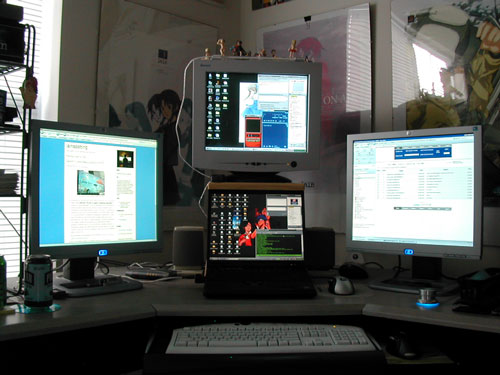
Exploring my desktop (a.k.a. "Opera everywhere you turn")

desktop

When people see my computer/monitor setup, they often ask me "Why do you need so many monitors? What do you use them for?" It's a legitimate question, and one that I'll try to answer here.

Ultimately, I like to have a lot of different things open at once, and to accomodate that, I need a lot of screen real estate. One way to do that would be to buy a huge monitor running at a high resolution. Since I don't have thousands of dollars just waiting to be spent, a cheaper solution was to set up multiple monitors attached to a couple of computers running simultaneously.

My setup

That's right, not all of those monitors are associated with one computer. My primary computer is my IBM Thinkpad laptop, and I have a 19 inch LCD monitor attached to it on the left side as the secondary monitor. My other computer (which is hidden away below) is a Dell desktop I bought back in 1999 or so. Back then, it was top of the line. These days, it serves as a nice secondary unit. The CRT above my laptop serves as the primary monitor for the Dell, and I have another 19 inch LCD to the right of my laptop which serves as the Dell's secondary monitor.

Running 4 displays with the following resolutions gives me a ton of pixels to work with:

Thinkpad display: 1400 x 1048
HP LCD: 1280 x 1024
HP LCD: 1280 x 1024
Envision CRT: 1024 x 768

All added up, that's 4,875,072 pixels, and everything is nicely sized (text is not too big, and not too small). I used to have a third monitor attached to my Dell (for a total of 5 displays), but I decided that 4 total displays is enough for my needs (for now).

How I use it all

With my Thinkpad, I access my primary email and I chat with my college friends via a shell account that is constantly open on my primary monitor. I also use IM on the Thinkpad to do research-related IM. On my secondary monitor, I have Opera open pretty much constantly, which I use to do all my web browsing/research, and believe me when I say that I do a lot of it (thank god for tabbed browsing). Most of my content creation happens on the Thinkpad, as well. When I want to update my website, I just hit ctrl-F3 in Opera to view the source in my text editor of choice, and I start making changes. Image editing for the web, scanning with my CanoScan N1240U, getting images from my Nikon digital camera, uploading music onto my Creative Muvo N200 MP3 player, writing documents, updating this blog, etc. is all done on my Thinkpad. Since my Thinkpad is the more powerful computer, I also use it to watch anime.

I use my Dell for stuff that happens in the background. For example, I use it to play my music: MP3s using Winamp, and CDs using the serial experiments lain CD player (see http://www.geneon-ent.co.jp/rondorobe/game/frame_lain.html). I also use it to IM my friends. This all happens on the primary monitor--the CRT above the Thinkpad. On my larger LCD screen, I once again have a copy of Opera constantly open. On this copy of Opera, I generally have at least 4 tabs open at any given time:

1. My university webmail account
2. My incoming mail from my Gmail account. For this, I use Gmail's POP functionality and M2--Opera's internal mail reader (which is truly excellent, by the way)
3. My website stats tracker
4. Miscellaneous IRC, whether it's for research or to chat with other Opera users about brower customization, etc.

I also keep my Opera mail panel open because I also use M2 to read my various newsfeeds (I have 13 at the moment). Whenever a feed gets updated, Opera shows which articles I haven't read yet. Opera's RSS reader also displays full articles, which is a really nice feature. For example, I can read slashdot without ever actually going to the slashdot website (unless I want to view comments, of course).

Finally, I use my Dell to watch DVDs (on the CRT).

Other accessories to make my life easier

You'll notice my Altec Lansing ADA880's to the left and right of my Thinkpad. I got these surround speakers when I got the Dell, and although they're old, they still do the job. They were one of the first computer speakers to include a built-in Dolby Digital decoder. They play sound from both my Thinkpad (analog signal) and the Dell (digital signal), and they sound really amazing when playing DVDs that have Dolby Digital encoding. The analog signal from my Dell gets piped to my Pioneer HDJ-1000 headphones, which I use late at night so as not wake up my wife. Audio-in from my old Walkman lets me play cassette tapes and listen to the radio.

For the Thinkpad, I routinely use the Trackpoint button on the keyboard, but I also use a Logitech MX700 wireless optical mouse on a 3M Precise Mousing Surface, which actually does seem to make a difference.

For my Dell, I use a Logitech MX1000 wireless laser mouse on an anime-related mousepad.

The glowing blue knob at the right is my Griffin Powermate. Yes, it's a glorified volume controller, but it's really nice (I like nice metal things).

On top of my CRT, I have a USB-powered Antec external light tube. I can choose between half a dozen colors. I'm not into case-modding or installing glowing lights everywhere, but I often use my computers with the lights off, and having a little extra ambient light can be soothing (especially when it's glowing green or blue to offset the brightness coming from my monitors).

I use a port replicator with my Thinkpad. That allows me to quickly dock and undock the laptop without having to mess around with the cables in the back.

My keyboard mod

As I was writing this, my slashdot feed updated, and I ran across an article about a new blank keyboard that is now being sold. It reminded me to take a picture of my Thinkpad's keyboard. After heavy usage, the letters on many of my keys started to come off, so I decided to go for broke and get rid of all the letters. My solution was simple; I just used sandpaper. The overall visual and tactile effect is nice, and I am a better typist now, as well. Here's the photo:

keyboard


By the way, if you came to this page looking for info on how to get your Thinkpad trackpoint button working with Opera, visit this Opera forum link for more information.